 0498 70 98 60
When a water heater fails or the AC quits during a heat wave, nobody browses. They search, tap the first credible result, and call. For HVAC, plumbing, electrical, roofing, and garage door companies, that moment is where Google Ads earns or wastes its budget. The difference between a profitable account and an expensive one usually comes down to targeting, call handling, and whether the campaigns know which calls turned into paid jobs.
Référenceur manages Google Ads for home services companies that want calls they can book, not just clicks. We’re a French-speaking Google Partner from Belgium and Luxembourg with more than 15 years of paid search campaigns behind us and a Google rating of 4.7/5 across 107 reviews; U.S. companies work with us remotely. Get a free assessment for a review of your account, or of your launch plan if you’re new to Google Ads.
Where Home Services Budgets Usually Leak
Most underperforming accounts we audit have the same handful of problems:
- Location settings that are too loose. Google Ads can show ads to people who are in your area or merely interested in it. For a plumber, a click from someone three states away researching their parents’ home is usually wasted. Switching to “Presence” targeting and drawing your real service area fixes a lot.
- No negative keywords. Searches like “plumber salary,” “how to fix a leaky faucet,” or “HVAC training” burn budget every day.
- Ads running when nobody answers. If calls go to voicemail after 6 p.m., those clicks are mostly lost. Ad schedules should match your dispatch hours, or your answering service should be ready.
- Every service lumped together. Emergency repair, routine maintenance, and new system installs have very different values and should never share a budget.
- No connection to booked jobs. Counting every 30-second call as a conversion teaches Google’s bidding to find more short calls, not more customers.
How We Structure HVAC PPC and Plumber Google Ads
| Layer | What we set up | Effect on results |
|---|---|---|
| Campaign split | Separate campaigns for emergency repair, maintenance plans, and replacements or installs | Budget follows the margin, not the volume |
| Geography | Presence-only targeting, ZIP codes or radius matching your service area, bid adjustments by area | Fewer wasted clicks from outside your territory |
| Keywords and negatives | High-intent terms (“AC repair near me,” “emergency plumber”) plus a growing negative list | Spend concentrates on buyers |
| Ads and assets | Responsive search ads, call assets, location assets, sitelinks for financing or service plans you offer | More qualified calls from the same impressions |
| Landing pages | One page per service, phone number visible above the fold, trust signals, short form | Higher conversion rate from paid traffic and a stronger landing page experience rating |
| Conversion tracking | Call tracking with minimum duration, form tracking, offline import of booked or completed jobs | Smart Bidding optimizes toward revenue, not noise |
Seasonality matters, too. HVAC PPC in Phoenix or Houston looks nothing like HVAC PPC in Minneapolis, and furnace and AC demand swing by month. We plan budgets and messaging around your local season instead of running the same campaigns year-round.
Local Services Ads Management
For many trades, Google Local Services Ads appear above regular search ads. You pay per lead rather than per click, and ads show a verification badge. Since October 2025, Google has been replacing its older Google Guaranteed and Google Screened badges with a single Google Verified badge for businesses that pass its screening, which can include license and background checks depending on the category.
Local Services Ads management involves work that standard PPC doesn’t:
- Completing verification and keeping documents current.
- Setting the right job types and service areas.
- Responding fast, since responsiveness affects how often your ads show.
- Disputing leads that don’t qualify, within Google’s rules.
- Building reviews, because ratings weigh heavily in ranking.
We run Local Services Ads alongside Search campaigns so both channels share one lead-tracking system and you can compare them fairly.
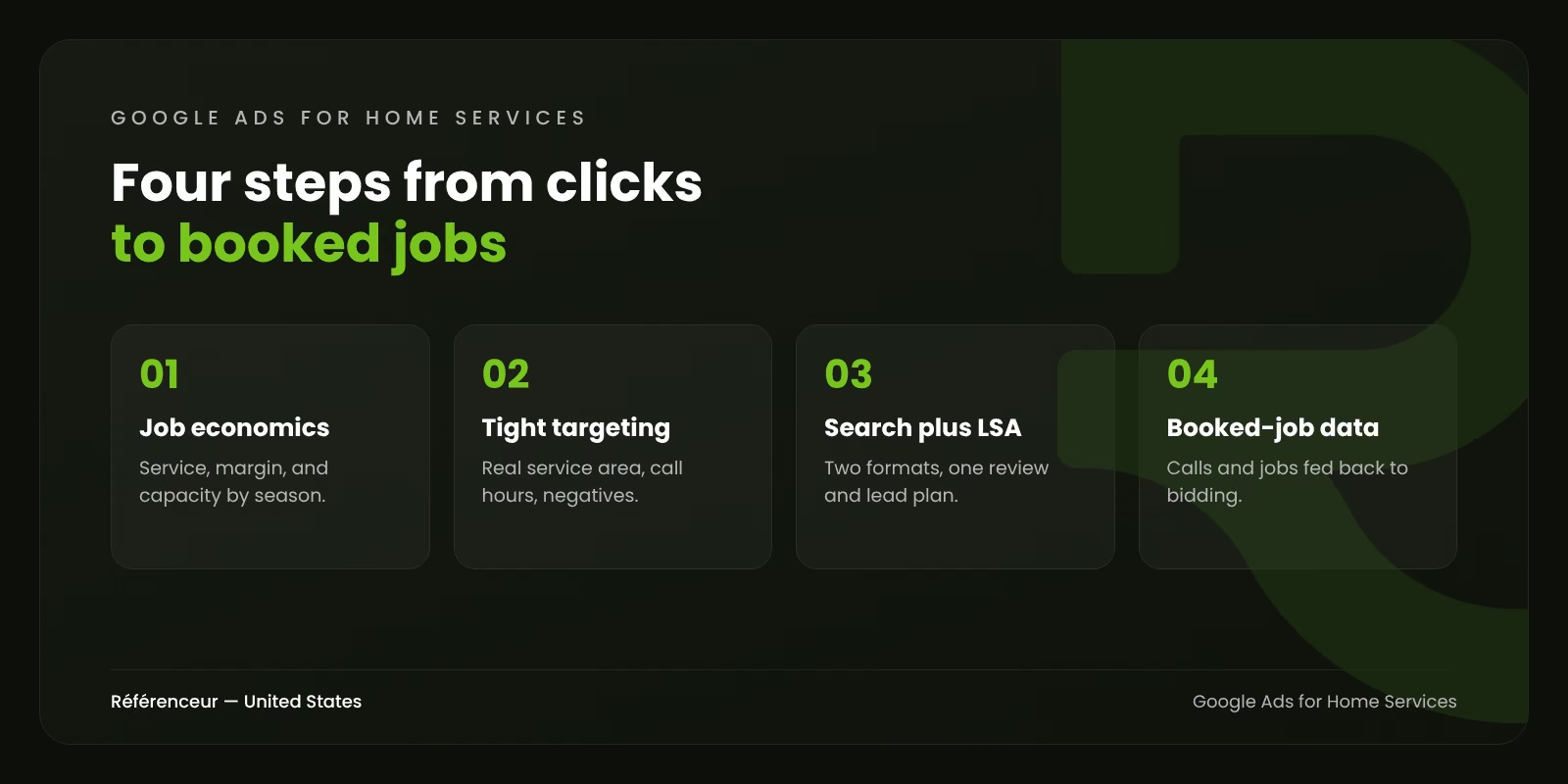
Feeding Booked Jobs Back Into Google Ads
The biggest gain for most home services accounts comes from better data. If your CRM or field service software, such as ServiceTitan, Housecall Pro, or Jobber, records which leads became booked jobs, we can send that information back to Google Ads through offline conversion imports, on top of the call and form tracking described in our Google Ads conversion tracking guide. Smart Bidding then learns which searches, times, and areas produce real revenue. Setup depends on your software and how your team captures lead sources, and we’ll scope it during the assessment.
The Phone Is Part of the Campaign
A surprising share of wasted ad spend in home services happens after the click: calls that ring out, voicemail boxes that are full, or office staff who don’t ask for a booking. We review call recordings or call outcomes where your tools allow it, flag missed-call patterns by hour and day, and adjust schedules accordingly. Sometimes the most profitable change isn’t in Google Ads at all, but in how quickly and how well your team answers the phone.
SEO Still Matters
Paid ads deliver calls immediately, but costs per click in home services rarely go down over time. A solid organic presence, especially in Google Maps, reduces dependence on paid leads, as our page on SEO for contractors and trades explains. Our SEO agency team can work on that side while we manage the ads, using the same review and profile foundation.
How We Work With Home Services Companies
Nobody from Référenceur sits in a U.S. office: we operate from Belgium and Luxembourg, so your account gets reviewed before your trucks roll out in the morning. Here’s how an engagement typically runs:
- A video call to understand your services, margins, technicians, and peak seasons.
- An account audit or, for new advertisers, a campaign plan.
- Rebuild or launch, starting with tracking so every later decision rests on real data.
- Weekly optimization of keywords, negatives, bids, and budgets.
- A monthly report in plain English: calls, booked jobs where available, cost per lead, and next steps.
For references, our team in Belgium and Luxembourg points to European clients like Isolpur, an insulation company, and Menuiserie Rosen, a joinery business, not to U.S. results we can’t show. See how we approach paid search in general on our Google Ads agency page, or check the U.S. locations we cover. Get a free assessment to find out where your current budget is leaking.
Frequently Asked Questions About Google Ads for Home Services
Should I Run Local Services Ads or Search Ads?
Often both. Local Services Ads tend to bring lower-friction calls with a verification badge, while Search campaigns give you more control over keywords, ad copy, and landing pages. We test both and allocate budget based on booked jobs.
How Much Should a Home Services Company Spend on Google Ads?
There’s no universal figure. We don’t publish prices or fixed budgets; we model your numbers during the assessment, based on the jobs you can handle and what each one is worth to you.
Why Am I Getting Calls From Outside My Service Area?
Usually because the campaign targets people interested in your area, not just people in it, or because the radius is too wide. Tightening location settings is one of the first fixes we make.
Can You Track Which Ads Led to Booked Jobs?
In many cases, yes, through call tracking and offline conversion imports from your CRM or field service software. The setup depends on your tools and how your office logs lead sources.
Do You Manage Ads for Emergency Services That Run 24/7?
Yes, as long as someone answers. We match ad schedules to your real availability, so you don’t pay for calls nobody picks up. Request a free assessment to review your setup.