 0498 70 98 60
Meta Descriptions and SEO: How Often Does Google Rewrite Them?

Title tags and meta descriptions are among the elements you optimize on each page of a website to perform better in search engines. Meta descriptions don’t play a major role in how a page ranks for a given keyword, but they help searchers know what to expect before they click. In some cases, though, Google prefers to pull a snippet from the page and ignores the meta description you wrote. When does that happen? Let’s find out.
Study: How Many Meta Descriptions Does Google Change?
To get to the bottom of it with hard data, Ahrefs ran a study comparing meta descriptions with the snippets Google actually shows. It covered 20,000 keywords and nearly 200,000 pages ranking in the top 10. The results are a little surprising:
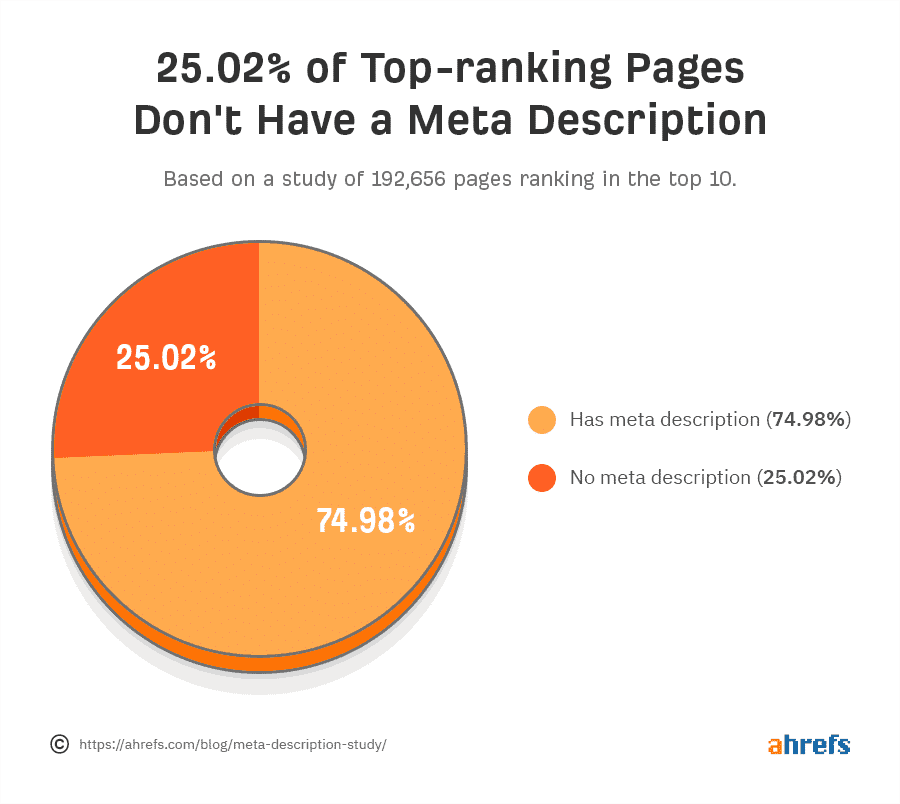
The study found that 25% of pages ranking in the top 10 have no meta description at all. That’s one in four. Pretty wild, right?
The study also shows that Google rewrites meta descriptions most of the time:
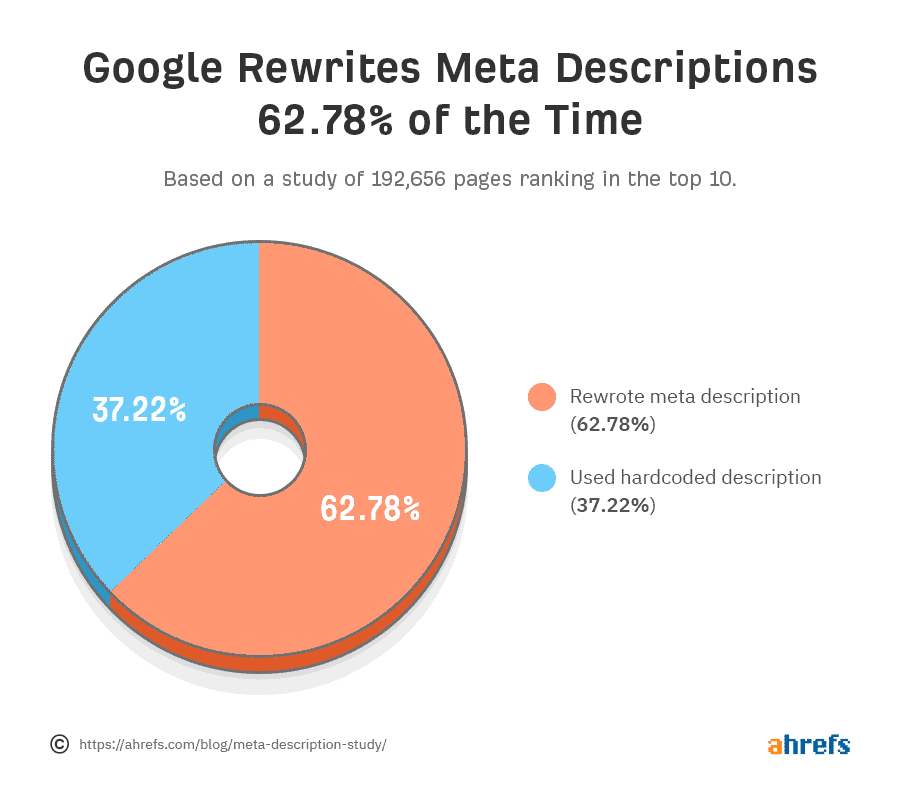
You read that right: Google rewrites meta descriptions in nearly 63% of cases. Sometimes the rewrite helps, because it highlights a snippet that is more relevant to the searcher. When a meta description is too long, Google truncates it with an ellipsis.
According to the study, Google rewrites 62% of meta descriptions it considers not relevant enough and 64% of those that are too long. In other words, following best practices doesn’t reduce the risk that Google will rewrite your meta description. Ahrefs suggests this may be partly due to the high number of overly long meta descriptions (nearly 41% of the URLs studied).
So Should You Still Write Meta Descriptions?
The answer is a big YES. Make sure your meta descriptions are relevant and spark searchers’ interest, even if Google will display them as written in only about 37% of cases. They’re a small but useful part of a complete on-page SEO plan. We recommend starting with these pages:
- Pages that get a lot of organic search traffic
- Pages created specifically to rank in search engines
- Pages likely to be shared on social media
Where Things Stand in 2026
In August 2021, Google changed the way it generates title links and began replacing HTML title tags more often too, so the same logic now applies to titles. Google’s documentation still says it may build snippets from the page’s content when that better matches a specific search. Our guide to title tag SEO covers how to write titles Google is more likely to keep, and the Performance report described in our Google Search Console guide shows which pages get impressions but few clicks.
Need Help With Your On-Page SEO?
Référenceur is a French-speaking SEO agency from Belgium and Luxembourg that works with U.S. businesses remotely, through video calls, shared screens, and monthly reporting. Explore our SEO services or request a free assessment.