 0498 70 98 60
Is Link Juice SEO Snake Oil? What Google’s John Mueller Said
Should you really dismiss any SEO advice that mentions “link juice”? Here’s where the term comes from, and why you may not want to throw it out entirely.
Google’s John Mueller, in a rare moment of irritation, said that any SEO advice mentioning “link juice” can’t be trusted. So, is he right?
Opinions differ, and it’s not easy to sort it out.
After Barry Schwartz, CEO of RustyBrick, raised the topic on LinkedIn, a lively debate followed. Even Rand Fishkin, founder of Moz and SparkToro, joined in the comments, joking that maybe link juice is real after all and everyone should write more about it. Let’s take stock.

Link Juice and the SEO Industry
When Mueller took aim at link juice, he was answering a question about outbound links. He essentially ignored the original question and responded only to the unwelcome mention of “link juice”.
Mueller is usually even-toned on Twitter, but this time he came close to fuming: anything that talks about link juice, he wrote, should be ignored.
That’s nothing new. He was repeating a view he had shared more than once before. In 2020, he tweeted that he would forget everything you’ve read about link juice, because it is very likely obsolete, wrong, and/or misleading.
So is link juice such a dreadful term? Is it the kind of snake oil that fringe SEO practitioners keep selling? Let’s step back for a moment.
Snake Oil: SEO’s Miracle Cure
There’s a reason the SEO industry had a bad reputation for many years. Snake oil has been sold in many forms, and plenty of websites have been hurt by misguided SEO advice and tactics, sometimes badly enough to need a full Google penalty recovery.
The term “snake oil,” a byword for misleading promises and miracle cures for every ailment, has often been associated with SEO.
Even in 2022, we see far more #seohorrorstories shared on Twitter and other social networks than inspiring success stories. SEO professionals themselves, not just outsiders, tend to focus on the negative news rather than the positive.
Of course, SEO is not the only industry that sells snake oil.
Over the years, many people have criticized unethical SEO practices. Even today, you need firm ethics to avoid getting pulled into a downward spiral of questionable SEO techniques. As an SEO agency, we regularly receive offers for paid links and similar schemes.
The History of Link Juice
When Google entered the crowded, messy search engine market, it had a groundbreaking ranking algorithm that used “PageRank” to determine a website’s authority. PageRank was named after Google cofounder Larry Page, not after the web “page” itself.
SEO practitioners started using plenty of slang terms for PageRank, with “Google juice” and “link juice” among the most popular.
In its early years, Google got fairly good results from PageRank alone and kept growing its market share.
First-generation search engines such as AltaVista, Yahoo, and Infoseek were easy to game with fairly simple techniques:
- keyword stuffing
- hidden text
- misleading meta tags
Once Google became big enough to dominate the market, “unethical” SEO practitioners shifted their focus to artificially inflating the number of inbound links (backlinks) so Google would rank their pages higher.
PageRank became less and less of a guarantee of high-quality search results, which led Google to gradually add other ranking signals and systems to its algorithm.
As link juice abuse spread, Google kept adding ranking signals, sophisticated technologies such as artificial intelligence, and quality concepts such as E-A-T (expertise, authoritativeness, and trustworthiness).
What Does Link Juice Actually Mean?
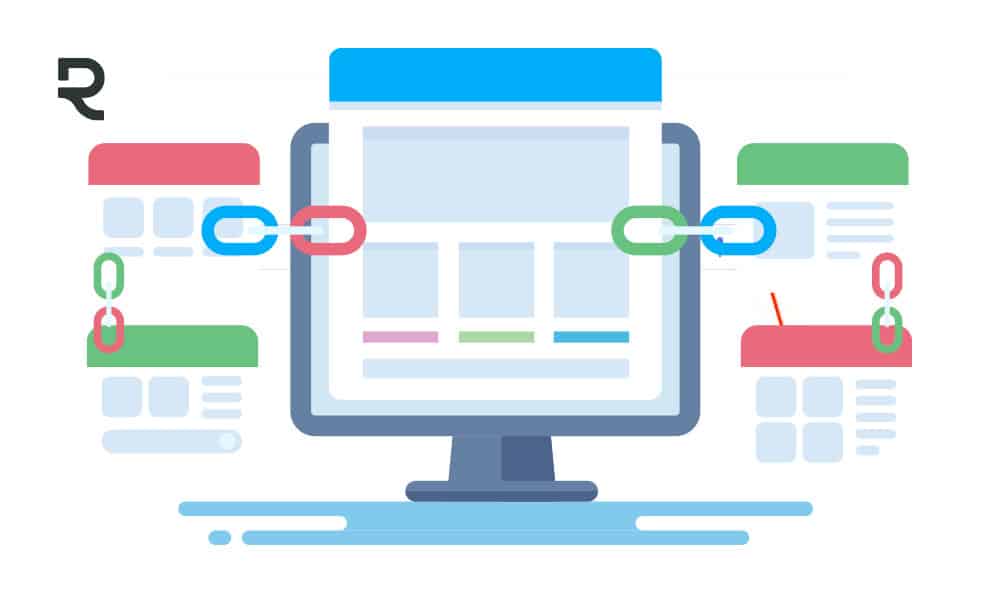
In SEO, link juice usually refers to how the value of backlinks is passed to and distributed across a web page, along with the good (or bad) reputation of those links. The quantity and quality of those backlinks determine how strong that “juice” is.
How Does Link Juice Work?
We won’t go deep into defining link juice, as others have already done that well. WooRank’s guide to link juice gives a quick overview and is worth a read; its illustrations are especially clear.
In theory, the authority of the linking page is split more or less evenly among the pages it links to.
In reality, the process is far more complex, and the value of a link depends on many other factors, including:
- Anchor text: too many keywords look excessive; too few reduce the value.
- Position on the page: footer links count for less than links in the main content, for example.
- Context on the site and the page: irrelevant or off-topic context offers less value.
- Additional attributes: HTML rel attributes such as rel=”nofollow” reduce a link’s value.
- Number of links: lists with dozens of links may not pass meaningful value.
Is Content the New Link Juice?
In 2019, Google shifted its messaging to focus on quality content. From the outside, it looks as though “content is the new link juice.” One of Google’s main SEO guidance documents, which once focused largely on links, was updated to cover content above all.
For a long time, Google representatives were wary of the industry’s focus on link building. Instead, they stress the need for quality content whenever the question comes up.
Today, Google tends to overemphasize content to raise awareness of it, and to downplay links so SEOs stop obsessing over them.
In Google Search Essentials, the “key best practices” section mentions content six times, including at the top, while links are mentioned only three times.
In our view, the truth is more nuanced, and the goal is to strike the right balance between the two. Links still matter a great deal, but their impact will likely shrink over time, while content keeps gaining importance.
So, Is Link Juice Real?
Even if the slang term link juice sounds dubious, the concept behind it (Google’s original algorithm) is still valid and still used to assess authority or value at the site and page level.
It’s a huge simplification of Google’s algorithm as it exists today, which is designed to deliver appropriate rankings that are harder to manipulate.
At the end of the day, you still need to attract links to your website; otherwise, other content of similar quality will outrank you in organic search. So while the term link juice may sound a bit dated, it isn’t pure snake oil yet.
What Do the Experts Say?
Fishkin isn’t the only one talking about link juice.
Brian Lonsdale, cofounder of Smarter Digital Marketing Ltd, argued that if Google doesn’t want you to do something, that means it works.
Pierre Zarokian, CEO of Submit Express and Reputation Stars, added that he wasn’t falling for it: in his view, Google’s algorithm has been based on link juice since 1998.
What Should You Call It Instead of Link Juice?

There are plenty of ways to refer to link juice without sounding like a dealer in a back alley.
Jessica Levenson, global head of SEO and digital strategy at NetSuite and Oracle, was blunt: links and their purpose aside, she considers it the worst phrase of all time and believes nobody should use it.
So what can you say instead? Some of the more professional terms include:
- Link authority
- Link value
- Link equity
Daniel Foley Carter, director at Assertive, said he calls it link equity, whatever Google says, and that anyone who has worked in SEO knows to take statements like Mueller’s with a big pinch of salt.
If that sounds too dull or technical, you can follow Brent Payne, who prefers “link tequila” because it’s simply more fun.
Link Equity Isn’t Enough
When you use a synonym for link juice, remember that the concept is fading and no longer works on its own the way it once did.
Back in 2004, in the early days of SEO, it was still common to rank nearly empty websites.
You could even get thin content pages to rank for competitive keywords simply by pointing link juice at them. In 2022, that’s a rare exception at best.
Focus on Creating Great Content That Attracts Great Links
As always, the truth lies somewhere in the middle. While Google downplays links in its algorithm and its public messaging, its technology still relies on links to some degree.
It’s still very hard to earn organic visibility on Google through content alone. But once that content is endorsed by links from authoritative sites, the odds of reaching Google’s top positions rise significantly.
So how do you get there without buying links or trying to trick Google?
Create Linkable Assets
For many years, website owners wanted to buy SEO services instead of creating content that could earn links. It’s not unusual to lose prospects when you explain that you can’t artificially boost the rankings of an empty site whose only content is self-promotion.
Linkable assets are comprehensive, valuable, and unique resources that other publishers are likely to recommend. In-depth guides, original survey results, and news are a few examples, and they’re one of the reasons content marketing is worth the investment.
Attract Links Naturally
Once you’ve published content that deserves links, ideally you just sit back and wait for people to notice and link to you.
At least in theory. In practice, you’ll most likely be overlooked unless you already have an established audience.
In that case, you should at least mention and quote experts in your content who already have an audience. They can help get the ball rolling.
Conclusion
As you can see, the link juice debate isn’t over, and there’s a gray area hanging over Google whenever the subject comes up. Are you team “links plus content,” “links without content,” or “content alone”? There are many approaches. At Référenceur, we bet on a mix: quality links backed by relevant content.
Where Things Stand in 2026
In December 2022, a few weeks after this article was published, Google expanded E-A-T to E-E-A-T by adding “experience” to its search quality rater guidelines. The advice above still holds: earn links with content worth citing rather than buying them.
Need Help With Content and Links?
Référenceur is a French-speaking digital marketing agency from Belgium and Luxembourg whose team works natively in French and English. We work with U.S. businesses remotely and help them build content that earns quality links. For a head start, read our SEO content writing tips. Get a free assessment of your link profile and content.