 0498 70 98 60
Local SEO: The Complete Guide for Small Businesses
When people need a plumber, a dentist, or a coffee shop, they search on Google, check the map, and read the reviews before they ever pick up the phone. According to BrightLocal’s 2026 Local Consumer Review Survey of 1,002 U.S. adults, 85% of consumers are more likely to use a business after reading positive reviews. For a business competing for customers in its own town, local SEO for small businesses isn’t optional: neglecting it means handing those customers to the competition. Understanding what is really at stake helps you attract more customers in your area and build a solid reputation, both online and in your community.
Key Takeaways
| Topic | Details |
|---|---|
| Why local SEO matters | It is essential for small businesses that want more visibility and more customers in their service area. |
| Strategic optimization | It requires a well-managed Google Business Profile, consistent citations across U.S. directories, and location-specific content. |
| Knowing your local market | It means adapting to each city, metro area, or service area you cover, and to the language your customers actually use. |
| Mistakes to avoid | Ignoring customer reviews and using keywords with no local context both undermine your digital strategy. |
Understanding Local SEO and Why It Matters
Local SEO is a critical digital strategy for small and midsize businesses that want to grow their online visibility and attract customers nearby. Unlike traditional SEO, it focuses on optimizing your online presence for a defined geographic area, usually a city, a county, a metro area, or a set of ZIP codes.
Consumers increasingly look for products and services close to home, often with “near me” searches. On Google, those searches surface the local pack (the map and the three business listings at the top of the results) and Google Maps. Earning a spot there depends on three factors Google itself names: relevance, distance, and prominence. Businesses that invest in a well-planned local SEO strategy enjoy several concrete benefits:
- Greater local visibility
- More customers from your immediate area
- More traffic to your website and your physical location
- Stronger credibility and local name recognition

Getting local SEO right starts with understanding what drives it. That means fully optimizing your Google Business Profile, publishing relevant location-specific content, and actively managing your online reviews and recommendations. Done well, these efforts help small businesses show up more often in Google Maps and the local pack, and turn those views into calls, direction requests, and website visits.
The Main Benefits for Local Businesses
Local SEO is much more than a digital marketing tactic for neighborhood businesses. It is a real growth driver that helps small businesses stand out in an increasingly crowded and connected market. By optimizing their local online presence, these businesses can turn visibility into concrete sales opportunities.
The benefits are many, and they are tangible. Social media can also play a key role in this strategy, helping local businesses:
- Target customers precisely by location
- Build local brand awareness
- Generate qualified leads
- Strengthen their online reputation
- Compete effectively with much larger players
Beyond visibility, local SEO helps businesses build a genuine connection with their community. By monitoring local conversations on social media and review platforms, small businesses can not only get noticed but also understand exactly what local customers need and expect, turning every online interaction into an opportunity to grow.
Proven Techniques to Improve Your Local Visibility
Local SEO calls for a strategic, multi-pronged approach. Local businesses need precise, targeted techniques to stand out in their market, combining digital tools with smart communication. Here are the essentials:
- Claim, verify, and fully complete your Google Business Profile
- Collect and respond to customer reviews
- Publish local, location-specific content
- Work location-based keywords into your pages
- Build high-quality local links
- Keep your name, address, and phone number (NAP) identical everywhere
An effective strategy also multiplies your digital touchpoints. Beyond Google, make sure your business is listed accurately on Apple Business Connect (for Apple Maps and Siri), Bing Places for Business, Yelp, the Better Business Bureau, Facebook, and Nextdoor, as well as the directories that matter in your industry. Data aggregators such as Data Axle and Foursquare also feed business information to many apps and navigation systems, so check what they have on file. The goal is a consistent, active digital ecosystem that reflects the authenticity and local roots of your business.
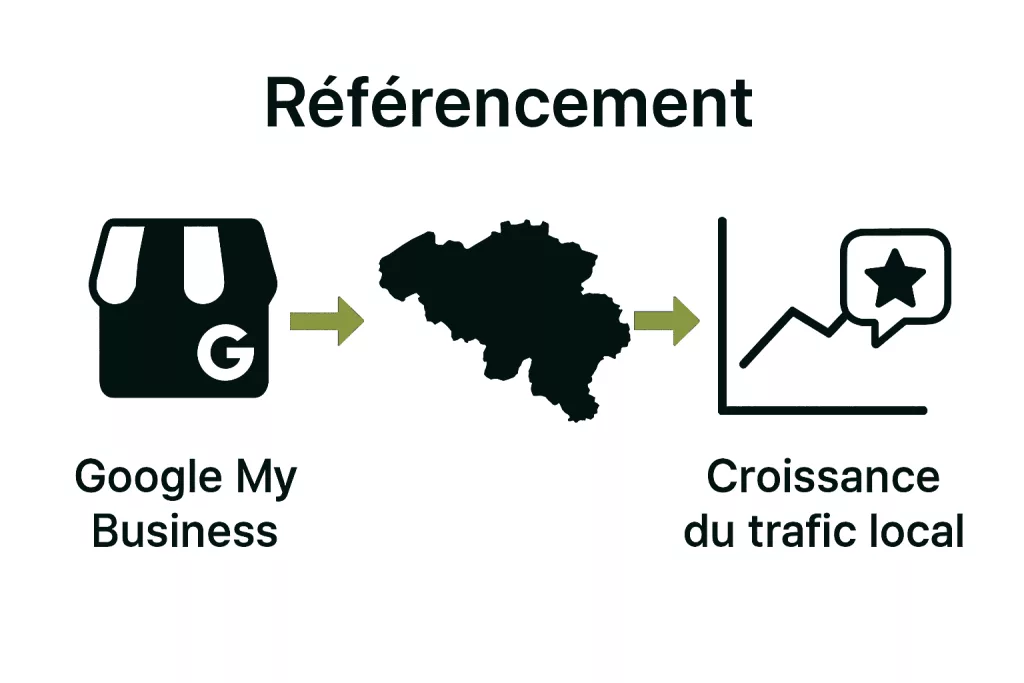
Local SEO Across U.S. Markets
Local SEO in the United States is never one-size-fits-all. A business serving a dense urban neighborhood faces very different competition and search behavior from one serving a sprawling suburban metro or a rural county. Rather than a uniform approach, local businesses need a tailored strategy for each market they serve.
In practice, that means a few key considerations:
- Creating a dedicated, genuinely useful page for each location or core service area
- Choosing the right setup for service-area businesses (hiding your address and defining the areas you serve)
- Using the place names your customers actually search for: city, neighborhood, county, or metro area
- Offering Spanish-language content where a significant share of your customers prefers it
- Showing local proof: state licenses, local projects, and community involvement
Local chambers of commerce, business associations, and community events are also valuable. They offer networking opportunities, local links and mentions, and first-hand insight into the specifics of your market, all of which can make the difference in a successful local SEO strategy.
Common Local SEO Mistakes to Avoid
Local SEO is a technical field where mistakes can quickly undermine a business’s visibility. Small businesses need to stay vigilant and steer clear of the most common traps, including:
- Letting your Google Business Profile go stale: outdated hours, missing categories, no new photos
- Using generic keywords with no local context
- Ignoring online reviews, or buying fake ones (the FTC’s rule on consumer reviews and testimonials bans fake reviews and incentives conditioned on positive sentiment)
- Publishing duplicate or thin content, such as near-identical city pages
- Listing inconsistent business information across directories
- Neglecting the mobile experience of your website
Grow Your Local Visibility With a Tailored Digital Strategy
Recognizing the challenges of local SEO is essential for any small business that wants to win more customers in a specific area. You need to optimize your Google Business Profile, manage your reviews effectively, and publish relevant location-specific content. Without expert support, these goals can feel complex. A tailored approach addresses each of them and helps you avoid the common mistakes that hurt your online presence.
Don’t wait to turn your digital strategy into a real growth driver. See how Référenceur puts more than 15 years of experience to work at every stage of local SEO. We are a European digital marketing agency, and we work remotely with U.S. businesses through video calls, shared screens, and monthly reporting. Whether you need SEO services or social media management, you get strategic, creative, results-focused support. Request a free assessment and start winning more customers in your area.
Frequently Asked Questions
What is local SEO, and why does it matter for small businesses?
Local SEO is a strategy that optimizes a business’s online presence to attract customers in its area. It matters for small businesses because it increases local visibility and drives traffic to both their website and their physical location.
How do I optimize my Google Business Profile?
Make sure every field is complete and up to date: business name, address or service area, phone number, hours, primary and secondary categories, services, and high-quality photos. Post updates regularly, ask your customers to leave reviews, and respond to every review.
What kind of location-specific content should I publish?
Publish blog posts, local news, events in your area, and testimonials or case studies from local customers. Working location-based keywords naturally into this content is essential to improving your local SEO.
How should I manage online customer reviews?
Respond quickly and courteously to every review, whether positive or negative. Show that you value feedback and are ready to fix any issues raised. This builds your credibility and strengthens your online reputation. Never buy reviews or offer incentives only for positive ones.