 0498 70 98 60
Google’s June 2019 Core Update and Site Diversity Update Explained
In early June 2019, Google announced two separate updates on Twitter: the first to the core of its ranking algorithm, the second to how search results are displayed. Since Google usually says very little about its updates, here’s a closer look at two changes that have already made plenty of noise in the SEO community.
Google Announces the June 2019 Core Update
On Sunday, June 2, 2019, Danny Sullivan announced on the Google SearchLiaison Twitter account that a new broad core algorithm update would launch the next day. That was unusual for Google, which tends to confirm algorithm updates only after they roll out, if at all.
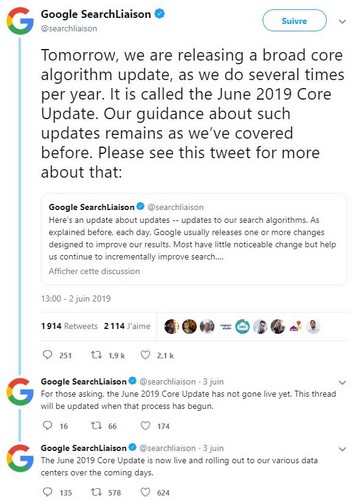
Google didn’t list what the June 2019 core update targets. However, comments from John Mueller, Google’s Webmaster Trends Analyst, offered a few clues, as reported by Search Engine Journal.
According to that analysis, Google increasingly looks at a website’s reputation. If a site doesn’t cite its sources, if its content looks outdated, or if there’s no information about the people behind the brand, Google may favor sites with a stronger reputation and better feedback from users elsewhere on the web, sites it considers more trustworthy.
To help site owners respond, Search Engine Journal put together a list of questions worth asking about your own site:
- Would you trust the information presented in this article?
- Is this article written by an expert, or does it include information approved by a specialist on the topic?
- Does the site cover a variety of topics, or does it always write about the same things?
- Would you trust this site enough to enter your credit card information?
- Does this article offer different, original information compared with other articles on the same topic?
- Does the article serve readers’ interests, or does it focus only on ranking in Google?
Your answers will give you a list of things to improve to meet your audience’s expectations. Building trust and anticipating your audience’s questions are key to keeping customers.
Site Diversity: Fewer Results From the Same Site?
Google announced the second update a few days later, also on the Google SearchLiaison account. This change applies only to how search results are displayed and is separate from the June core update.
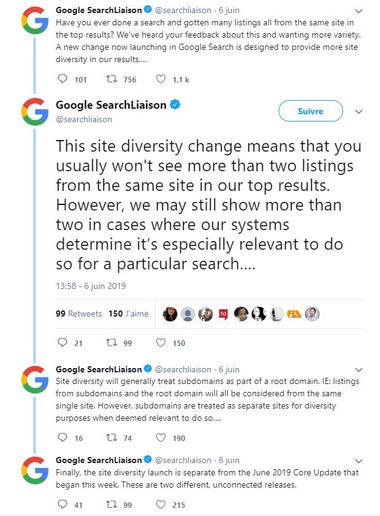
Danny Sullivan explained that, in response to frequent feedback, a single website will generally appear no more than twice in the top results for a given query.
Google noted, however, that it may still show more than two results from the same site when its systems determine that’s especially relevant to the search.
As for root domains and subdomains, Google said the site diversity update will generally treat a subdomain as part of its root domain, so both count as the same site. Here too, there are exceptions when the algorithm finds that listing them separately is relevant.
As its name suggests, the site diversity change is meant to help searchers discover a wider variety of websites for the same search.
Our Take on Google’s Two June 2019 Updates
Following these two updates Google launched in June 2019, you may or may not see changes in your site’s traffic. Either way, we recommend focusing on your site’s reputation and credibility to avoid losing ground in Google’s search results. The same advice applied after the March 2019 core update a few months earlier.
Where Things Stand in 2026
Google still releases broad core updates several times a year and now announces them on the Google Search Status Dashboard; our article Google core updates explained covers how they work. The site diversity system is still listed in Google’s guide to its ranking systems.
Want to improve your visibility on Google? Référenceur is a French-speaking digital marketing agency based in Belgium and Luxembourg, and we support U.S. businesses remotely with SEO services. Request a free assessment.