 0498 70 98 60
On-Page SEO Explained: A Complete, Practical Guide
Page two of Google is where clicks go to die: according to a Backlinko analysis of millions of search results, only 0.63% of Google searchers click on anything on the second page. That means your site’s visibility depends heavily on carefully optimizing every single page. On-page SEO isn’t just for experts. It’s a set of practical principles that can transform your site’s traffic and performance. Here’s how proven techniques, applied directly to your content, make a measurable difference for your business.
Key Takeaways
| Topic | Details |
|---|---|
| Content optimization | Write original, informative content that meets your users’ needs. |
| HTML tags | Use title tags and meta descriptions strategically to improve how your pages appear, and get clicked, in search results. |
| Internal and external links | Build a network of relevant internal links and point outbound links to high-quality, trustworthy sites. |
| Monitoring and fine-tuning | Review your site’s performance regularly and adjust your SEO strategy based on the data. |
What Is On-Page SEO? Definition and Core Principles
On-page SEO is the set of optimization techniques applied directly to the pages of a website to improve how they rank in search engine results. As Google’s own SEO Starter Guide explains, it covers how you structure your content, write your titles and descriptions, use relevant words your audience actually searches for, and improve the overall user experience.
The core principles of on-page SEO focus on a few fundamental aspects of your website. Here’s what you need to optimize:
- Quality content: Create original, informative copy that precisely meets your users’ needs
- Strategic keywords: Work relevant search terms naturally into your content
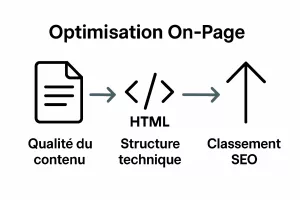
- HTML structure: Use heading tags (H1, H2, H3), meta descriptions, and image alt text correctly
- Technical performance: Make sure your pages load fast and are easy to navigate
Organic search optimization aims to improve a website’s visibility in search engines. That takes far more than inserting keywords: the quality of the user experience matters just as much.
To make your on-page SEO strategy work, focus on creating authentic content that genuinely answers your audience’s questions and needs. If you want expert help putting it into practice, take a look at our SEO services.
Essential Techniques to Optimize Your Web Pages
Optimizing your web pages effectively takes a strategic, methodical approach. Technical optimization plays a key role in organic search, improving both the user experience and your site’s visibility. Google’s documentation on title links recommends descriptive, concise titles, and clear headings and relevant internal links help search engines discover and understand your pages.
Here are the essential techniques to put in place:
- Optimized title tags: Write clear, concise, informative titles that accurately describe the page’s content
- Logical hierarchy: Use heading tags (H1, H2, H3) in a logical, organized way
- Quality content: Write original, informative copy centered on your target keywords
- Internal links: Build a network of relevant internal links to improve navigation and SEO
Your website’s technical performance is another decisive factor. That includes page speed, mobile-friendliness, and ease of navigation. Google now crawls and indexes sites primarily with its smartphone crawler (mobile-first indexing), so the mobile version of your pages is the one that counts.
Finally, remember that optimization is an ongoing process. Monitor your pages’ performance regularly, analyze the data, and adjust your strategy accordingly. Effective SEO takes patience, creativity, and a solid understanding of how search engines work.
On-Page Factors That Influence Your Rankings
On-page rankings depend on a range of technical and qualitative factors that determine how visible your website is in search results. Content optimization and technical structure both carry real weight.
A handful of fundamental elements can significantly impact your SEO:
- Title tags: Write precise, informative titles
- Meta descriptions: Write descriptions that make people want to click
- Content quality: Publish original, relevant content
- URL structure: Keep URLs short and descriptive
One often-overlooked element is external links. Linking out to authoritative, trustworthy sources gives readers useful context and supports your credibility, as long as you do it judiciously and in moderation.
Here’s a side-by-side summary of the main on-page SEO factors to optimize:
| SEO Factor | Description | Impact on Search Performance |
|---|---|---|
| Title tag | Precise, informative title | Very high |
| Meta description | Compelling summary that drives clicks (not a direct ranking factor) | High (on click-through rate) |
| Content quality | Original, relevant copy | Very high |
| URL structure | Short, descriptive URL | Medium |
| Internal links | Network of relevant links | Medium |
| External links | To trustworthy sites | Low to medium |
Get these details right, and every page has a better shot at ranking.
Common On-Page SEO Mistakes to Avoid
On-page SEO is a technical field where mistakes can quickly hurt your website’s visibility. A sound SEO strategy requires a meticulous, preventive approach to avoid the most common pitfalls that can drag down your rankings.
One of the most frequent mistakes is neglecting title tags and meta descriptions. They matter because they:
- Let you work in your target keywords
- Drive traffic from search engines
- Improve your click-through rate in search results
- Give searchers a preview of what the page offers
Another common trap is poor link management. Overusing nofollow on legitimate links, especially internal ones, can keep search engines from following and understanding the connections between your pages. The key is to keep a strategic balance in your internal and external linking. SEO rewards steady attention and regular adjustments.
Practical On-Page SEO Examples for Small Businesses
Small and midsize businesses have plenty of opportunities to improve their search visibility, even with limited resources. SEO isn’t reserved for large corporations: any motivated business can put it to work strategically.
From day one, small businesses should get a few critical basics right:
- Choose a relevant, memorable domain name
- Select a content management system (CMS) that fits your needs
- Plan your SEO strategy while the site is being built, not after
- Prioritize content quality over quantity
Real-world optimization comes down to simple but effective actions. For example, focus on writing locally relevant content, optimizing your meta descriptions, and creating relevant internal links. These techniques can significantly improve your visibility without a massive budget. Pair them with social media marketing to amplify your online presence and round out your SEO strategy. Consistency matters more than any single tactic.
Grow Your On-Page SEO With Référenceur’s Expertise
On-page SEO requires a precise approach to avoid common mistakes and optimize both the quality of your content and the technical structure of your pages. Maybe you’re struggling to master title tags, meta descriptions, or the internal links that are essential to your online visibility. For a small business or an entrepreneur, these issues are critical because they determine your Google rankings and your ability to attract qualified traffic.
At Référenceur, a European digital marketing agency with more than 15 years of experience, we help you put high-performing on-page SEO strategies in place, tailored to your specific needs. Our certified team handles every technical and creative aspect of turning your website into a powerful growth engine. We work with you remotely, through video calls, shared screens, and monthly reporting, and you’ll learn how to structure your content, optimize your pages, and track performance rigorously.
Don’t let your website go unnoticed. See how we can improve your organic search performance. Explore our full range of SEO services and our digital marketing solutions, then request a free assessment to start building lasting, effective search visibility.
Frequently Asked Questions
What Is On-Page SEO?
On-page SEO refers to all the optimization techniques applied directly to the pages of a website to improve how they rank in search engine results.
What Are the Key Elements to Optimize for On-Page SEO?
The key elements include content quality, strategic use of keywords, HTML structure, and the site’s technical performance.
How Can I Improve My Website’s Page Speed?
To improve page speed, optimize your images, use quality hosting, minify your CSS and JavaScript, and enable caching.
Why Do Title Tags and Meta Descriptions Matter for On-Page SEO?
Title tags help search engines understand what a page is about and are a strong on-page signal. Meta descriptions aren’t a direct ranking factor, but they shape how your page appears in search results and can significantly improve your click-through rate.